
Pretty Cripple -näyttely käsittelee vammaisiin kohdistuvaa vallankäyttöä ja valtarakenteita. Näyttelyn nimi tulee Garry Marshallin vuonna 1990 ohjaamasta romanttisesta elokuvasta Pretty Woman, joka My Fair Ladyn tavoin mukailee Bernard Shaw'n noin satavuotiasta näytelmää Pygmalion. Alkuperäinen tarina on runoilija Ovidiuksen käsialaa ja löytyy jo vuonna 8 jKr valmistuneesta eeppisestä runoelmasta Muodonmuutoksia.
Pygmalion-myytti kertoo lahjakkaasta kyproslaisesta kuvanveistäjästä, jota saarella asuvat naiset eivät keytmielisyydessään erityisemmin kiinnostaneet. Siksi hän alkoi veistää naista kivestä. (Miehen logiikkaa?) Kun veistos valmistui, se oli niin kaunis, että Pygmalion rakastui siihen oikopäätä. Hän nimesi patsaan Galateaksi ja hukutti sen lahjoihin. Lopulta Pygmalion meni temppeliin rukoilemaan Afroditea, että tämä antaisi hänelle vaimon, joka olisi yhtä täydellinen kuin Galatea.
Uteliaana naisena Afrodite poikkesi ateljeessa katsomassa Pygmalionin tuotosta. Huomatessaan sen näköisekseen, hän oli niin imarreltu, että herätti veistoksen henkiin. Niin Pygmalion ja Galatea saivat toisensa.
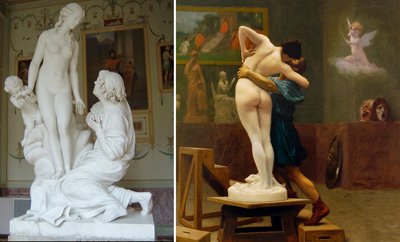
Vasemmalla: Étienne Maurice Falconet (1716-1791)
Pygmalion ja Galatea, 1763
Pariisi, Louvre
Oikealla: Jean-Léon Gérôme (1824-1904)
Pygmalion ja Galatea n. 1892
New York, Metropolitan Museum of Art


Kommentit